

Agrochemical Safety and Farmer Health: Best Practices and Field Advisory
Agrochemicals are indispensable for protecting crops and enhancing yields. Yet, their misuse poses significant health risks to India's farmers, with acute poisoning incidents affecting thousands annually due to inadequate handling and exposure. Formal adherence to safety protocols not only mitigates these dangers but also optimises efficacy, reducing long-term health costs and sustaining productivity.
Core Safety Protocols
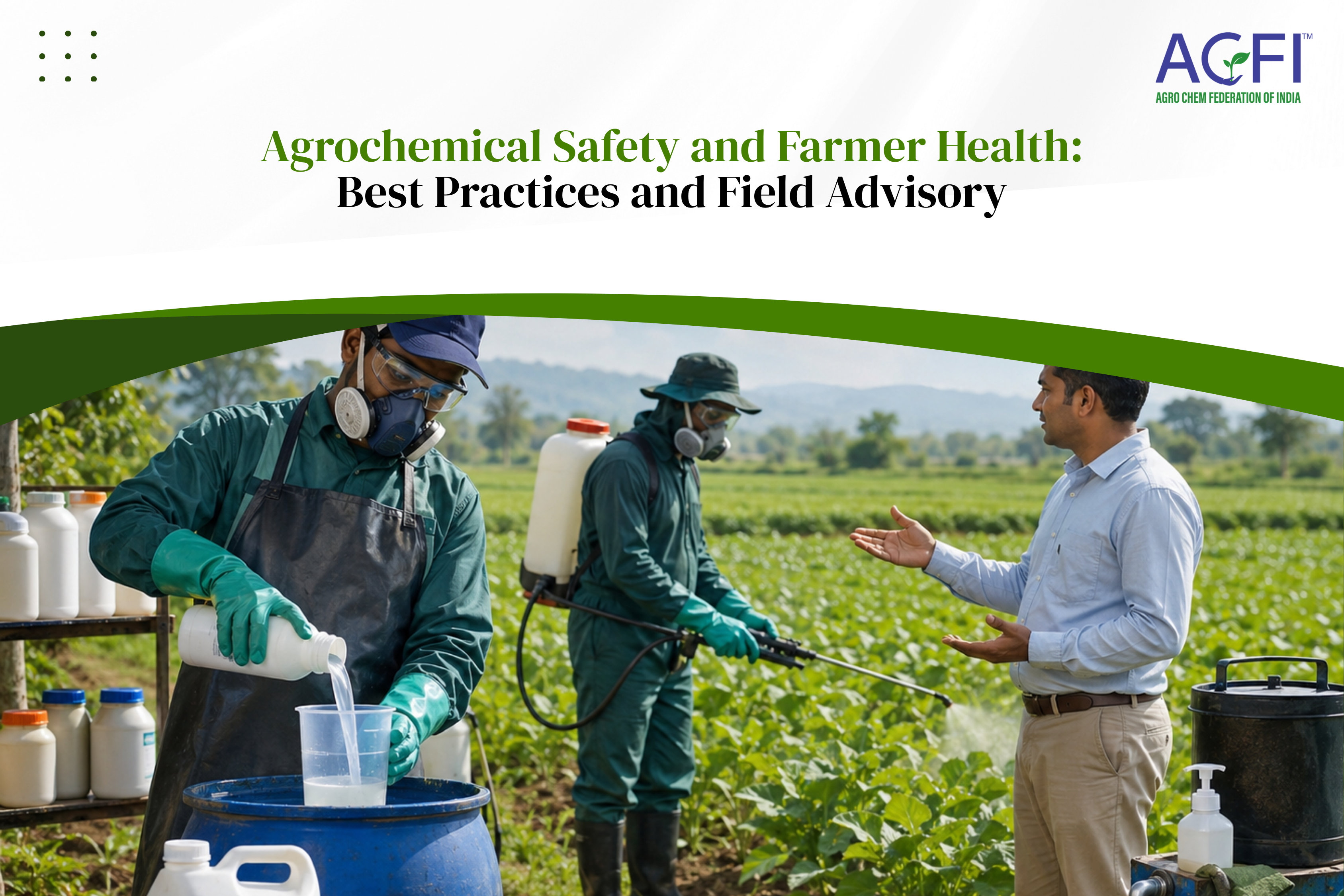
Essential practices begin with comprehensive Personal Protective Equipment (PPE), including chemical-resistant gloves, coveralls, boots, goggles and respirators, which prevent up to 90% of skin and inhalation exposures during mixing, loading and application. Containers must undergo triple rinsing with water added to the spray tank, followed by proper disposal in designated pits to eliminate residue hazards.
To maximise safety and effectiveness, apply products during calm, cool conditions, ideally at dawn or dusk, with winds under 10 km/h, and maintain a 30-meter buffer from homes, water, and bees. Eventually, safety is prioritised by showering immediately, laundering gear separately, and storing chemicals securely.
Integrated Pest Management (IPM) further minimises exposure by prioritising monitoring, biological controls, and chemical use only when at economic thresholds.
Field Advisory and Support Systems
Extension services through Krishi Vigyan Kendras (KVKs) and Farmer Producer Organisations (FPOs) provide vernacular training modules, QR-coded labels with safety summaries, and mobile apps for symptom checklists and antidote guidance. Annual health screenings detect chronic issues like respiratory ailments early, supported by subsidised PPE kits.
Documented cases from trained Tamil Nadu and Andhra Pradesh clusters demonstrate zero acute incidents and 20% productivity gains from healthier workforces.
Conclusion
Prioritising agrochemical safety through disciplined practices and robust advisories protects farmers' well-being while maximising agricultural returns. This structured approach fosters a culture of responsibility, ensuring agrochemicals serve as reliable tools for sustainable farming and prosperous rural communities.